How AI in Medical Imaging Is Reshaping Radiology
SaveLife.AI Team
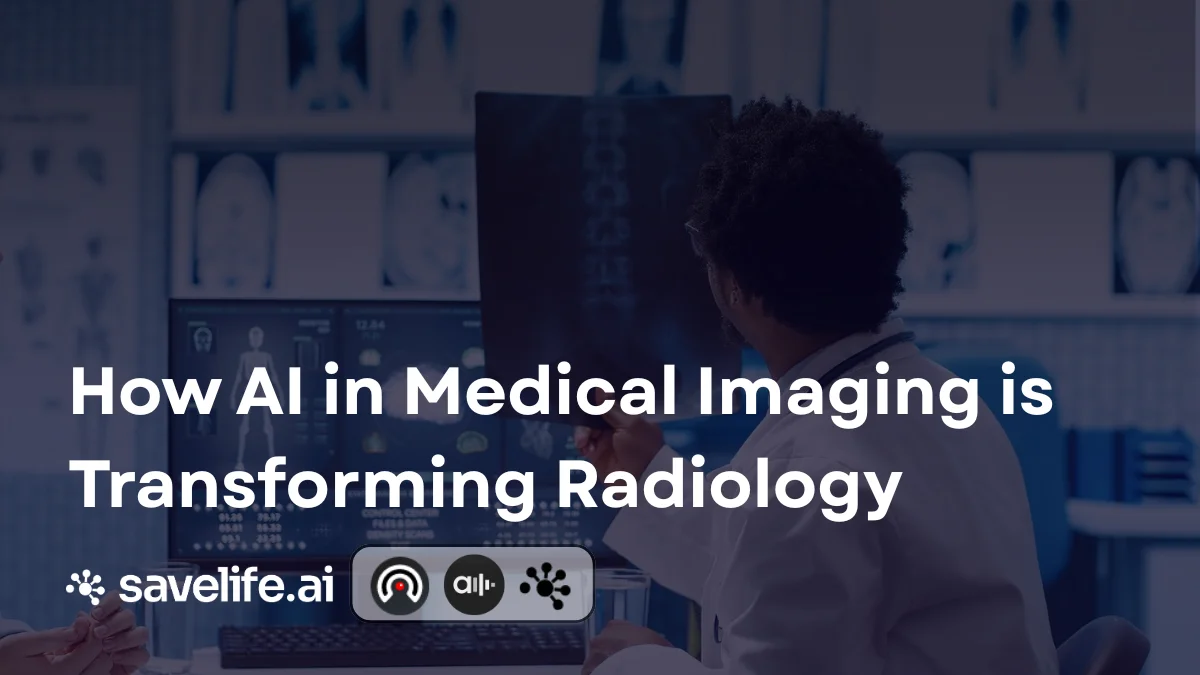
AI-driven automation accelerates image analysis, detects abnormalities earlier, and automates administrative tasks to enhance radiologist focus on complex cases.
AI in medical imaging is rapidly reshaping radiology, making it more efficient, accurate, and accessible. By integrating AI-driven automation, radiologists can analyze images faster, reduce diagnostic errors, and improve patient care.
The Role of AI in Medical Imaging
AI uses machine learning and deep learning algorithms to process and interpret radiological images, identifying abnormalities, segmenting structures, and generating detailed reports.
Enhancing Radiology Workflows with AI
AI rapidly analyzes vast amounts of imaging data, detecting subtle abnormalities in X-rays, CT scans, and MRIs with remarkable precision. This ensures early disease detection and reduces missed diagnoses. In critical cases like stroke detection, AI can prioritize urgent findings for immediate attention.
Beyond diagnosis, AI speeds up administrative tasks -- automating report generation, categorizing images by severity, and improving case management.
Overcoming Challenges in AI Adoption
Regulatory approval and ethical concerns are critical. Biased training data can lead to inaccurate diagnoses. Many facilities rely on legacy PACS systems, though solutions like RadioView.AI's X-API enable direct integration.
AI is designed to assist rather than replace human expertise. The future lies in collaboration where AI enhances efficiency while radiologists remain at the center of patient care.
The Future of AI in Radiology
AI integration with genetic and patient history information can help create tailored treatment plans. Self-learning AI models continuously refine diagnostic accuracy. Cloud-based imaging solutions like RadioView.AI enable radiologists to collaborate directly across locations. AI integration with wearable imaging devices and point-of-care ultrasound (POCUS) will further decentralize diagnostics.
FAQs
- How is AI used in medical imaging? AI speeds up image interpretation, improves early disease detection, and helps create personalized treatment plans.
- How is AI used in radiography? AI improves scanner time, reduces patient wait times, and predicts delays using RIS data.
- What is the role of artificial intelligence in diagnostic imaging? AI enhances imaging accuracy and assists in diagnosing and characterizing diseases.
- Is AI used in MRI? AI automates patient positioning in MRI scanners, reducing setup time and operator variability.
- When was AI first used in medical imaging? AI was introduced in radiology in 1992 as computer-aided detection for mammogram microcalcifications.
See it in action
Transform Your Clinical Practice
Experience AI-powered clinical documentation, radiology reporting, and more, live.
Book a Free Demo

Leave a Comment
Your comment will be reviewed before it appears.