| 510(k) | ||
|---|---|---|
| K260936 | Jul 2026 | |
| K253751 | Jul 2026 | |
| K252954 | May 2026 | |
| K241719 | Nov 2024 |
4 of 4 clearancesClass II, each its own device
Four FDA 510(k) clearances, each for its own device and each verifiable in the FDA database. Here are the records, the study results as filed, and the peer-reviewed work behind SaveLife.AI.


Every fact here is in the FDA 510(k) database. Open the clearance letters, summaries and labeling themselves, not only our summary of them.
| 510(k) | ||
|---|---|---|
| K260936 | Jul 2026 | |
| K253751 | Jul 2026 | |
| K252954 | May 2026 | |
| K241719 | Nov 2024 |
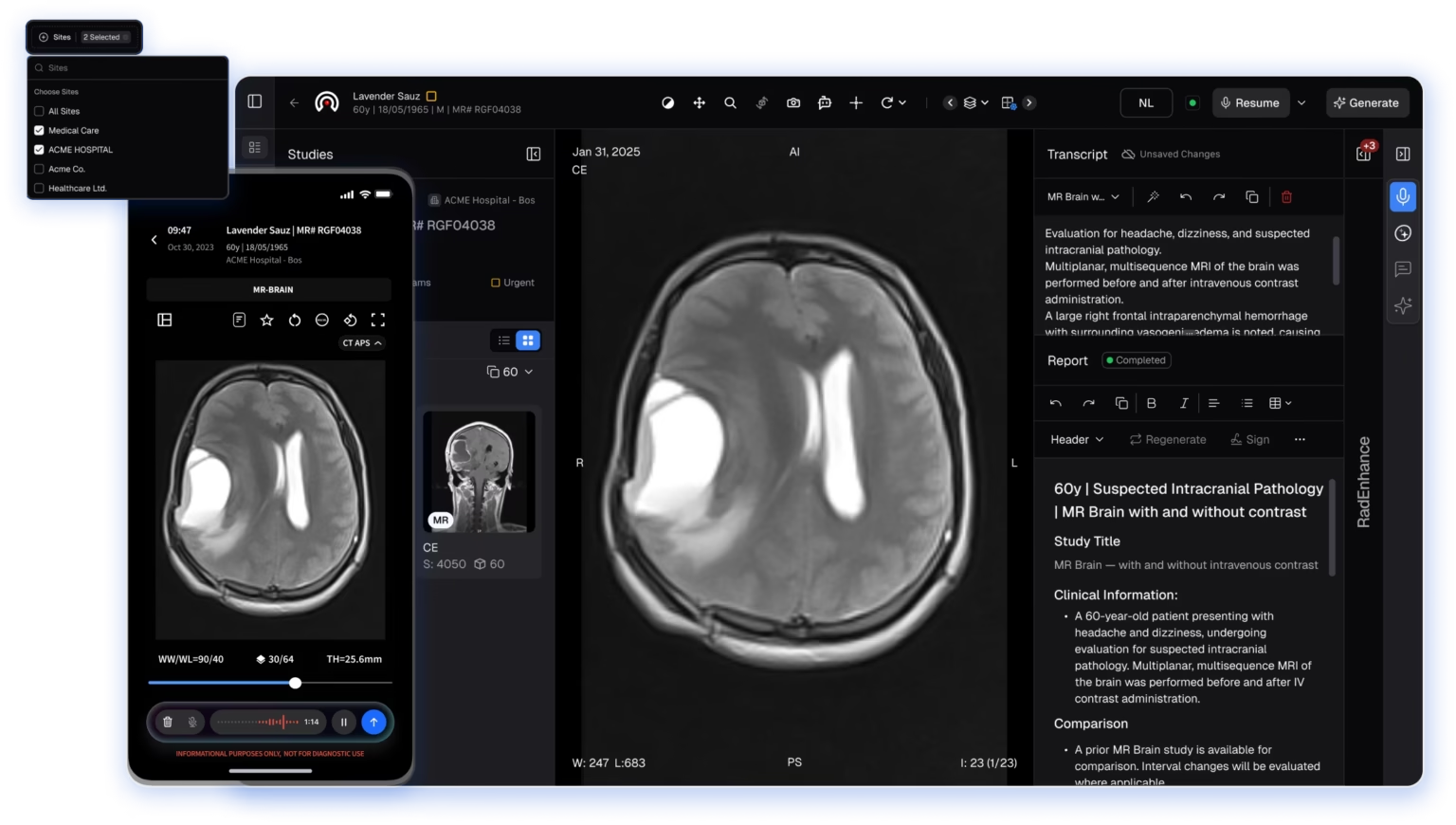
Medical image management and processing: viewing, transmission, storage, processing and visualization of multi-modality DICOM images. Prescription use only.
Covers the platform only. It does not perform diagnostic analysis or alter images, and does not cover the AI modules.
A 510(k) clearance is a specific finding about a specific device. Here is what it is taken to mean, and what each of ours covers.
“FDA approved”
FDA cleared through 510(k) premarket notification: substantially equivalent to a legally marketed predicate.
The whole company, or the whole AI Suite, is cleared
Each clearance covers its own device only: K260936, K241719, K252954 and K253751.
The AI makes the diagnosis
The modules triage and notify. A clinician reads every study, as standard of care.
Any finding on any image
The cleared indications only. CXRDetectAI: pleural effusion and pneumothorax on adult chest X-rays.
A promise of clinical outcomes
Standalone 510(k) study results, filed with their 95% confidence intervals.
Every product is a medical device
AizaMD™, ConnectAI™ and AI-RCM are not cleared devices. NeuroLVO and DenseViewAI are investigational, not for sale.
Every clearance is listed by its K-number in the FDA 510(k) database.
What 510(k) clearance meansStandalone device performance from each module's 510(k) study, exactly as filed, with 95% confidence intervals. Study results, not a promise of clinical outcome.
376 non-contrast head CT studies. Notification-only triage; clinicians read every study.
Specificity
95% CI 88.50–95.21
Accuracy
95% CI 90.37–95.45
AUC
Reported without an interval
Mean notification time
± 0.20 min, 128 eligible scans
The dot is the reported figure; the band is its 95% confidence interval, on a scale of 0 to 100.
Selected peer-reviewed work by Dr. Junaid Kalia, MD, and the SaveLife.AI clinical team, part of 27+ publications, book chapters and abstracts. Device validations are documented in each 510(k) record.

Cureus, 2025