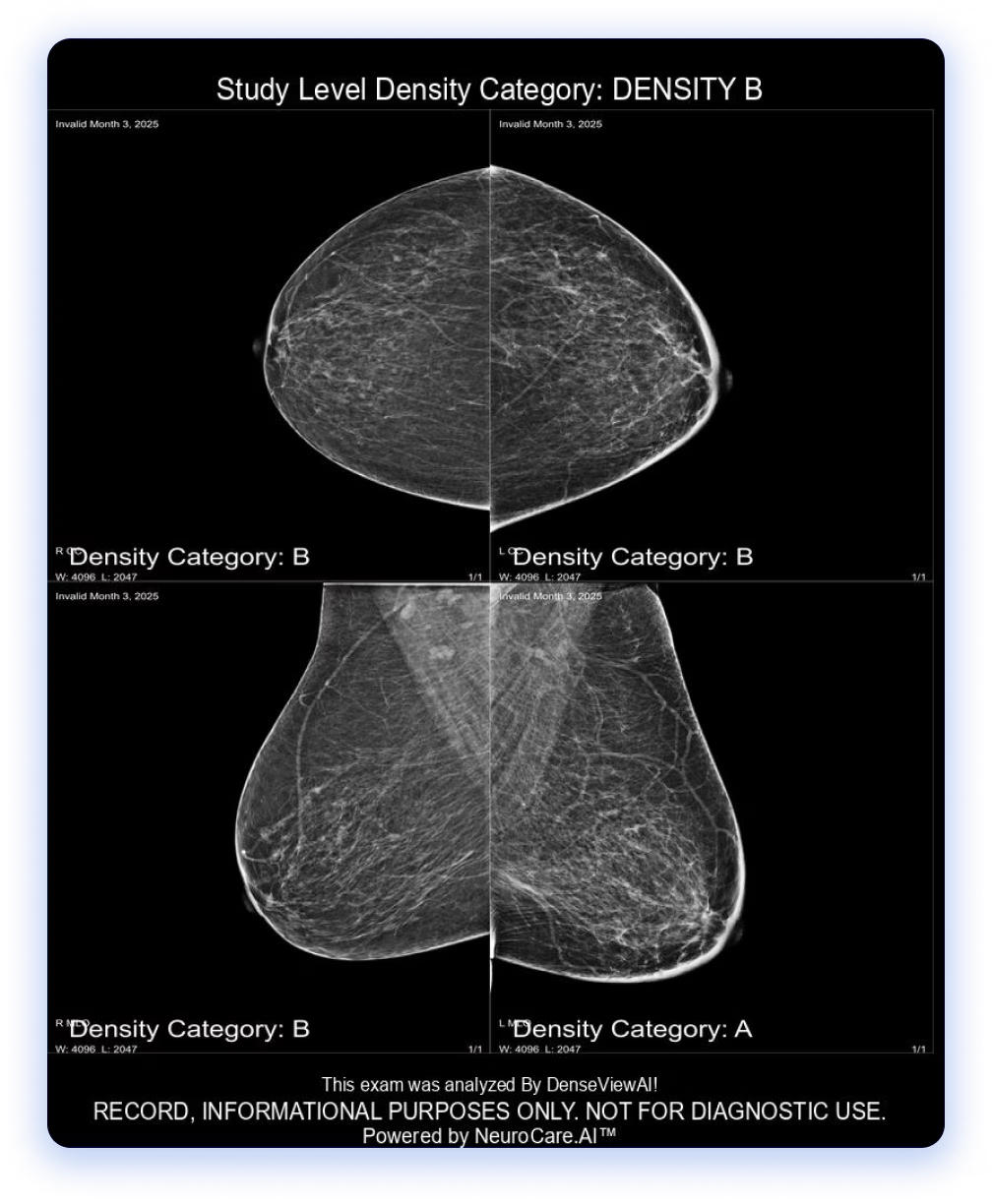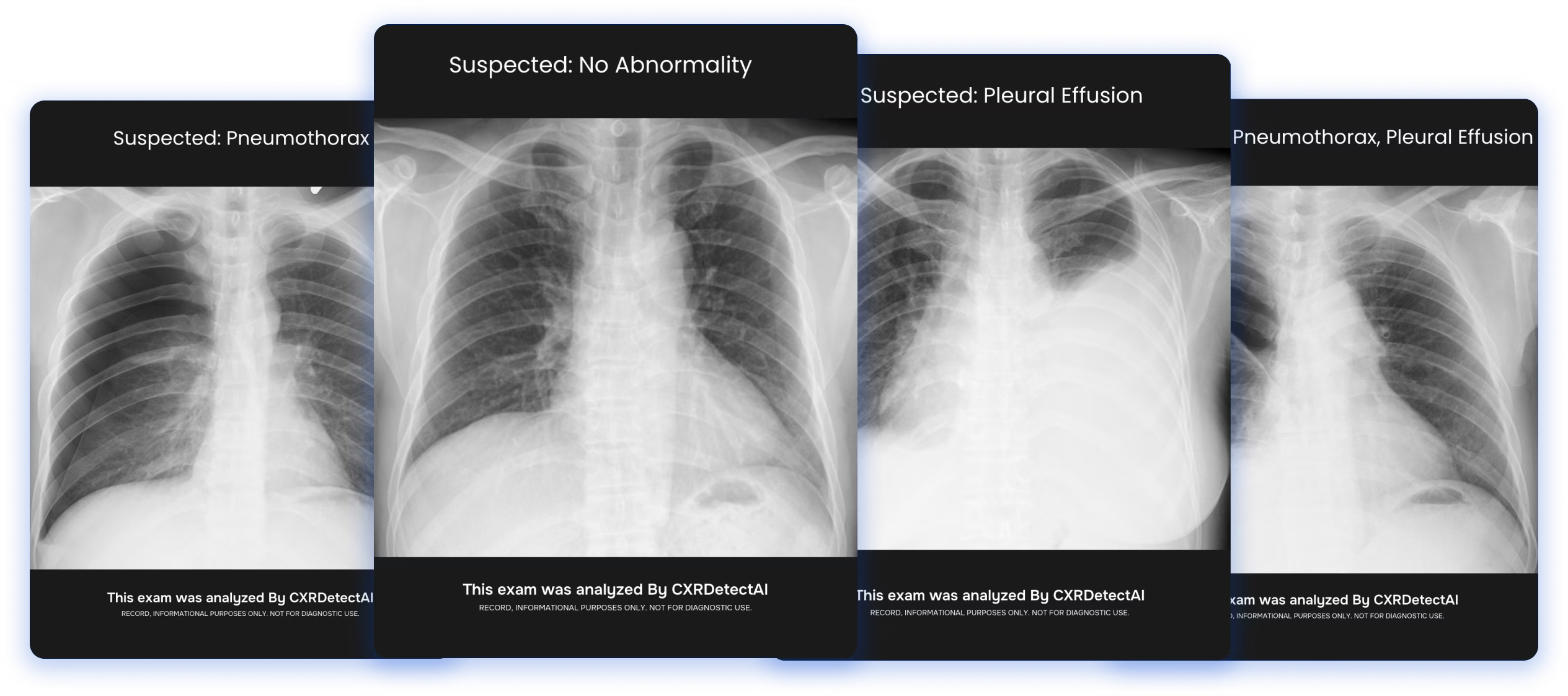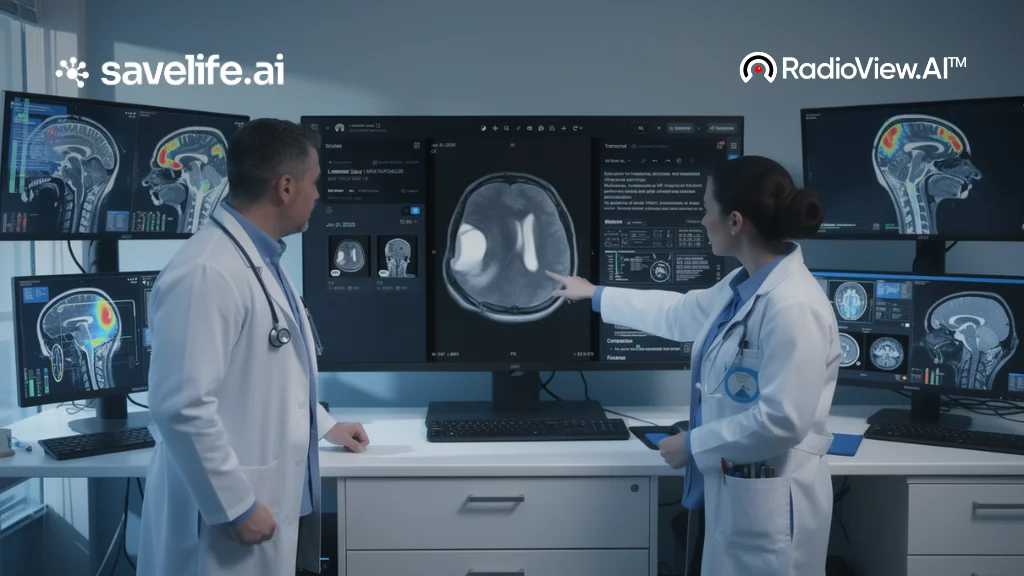
Artificial intelligence in radiology has crossed a decisive threshold. What began as a collection of narrow, single-task algorithms — a nodule detector here, a fracture classifier there — has matured into an ecosystem of integrated tools that are reshaping how radiologists read, measure, report, and communicate. The global AI in medical imaging market, valued at approximately $2.1 billion in 2024, is projected to exceed $5 billion by 2028, reflecting a compound annual growth rate above 25%. FDA clearances for AI-enabled radiology devices now surpass 900 cumulative authorizations, with the pace of new approvals accelerating year over year.
In 2026, the trends worth watching are no longer about whether AI works in radiology — that question has been answered — but about where AI delivers the most measurable impact on speed, accuracy, and revenue. The field is converging around several critical areas: automated segmentation and volumetric measurement, AI-powered report generation, multimodal foundation models, and workflow-integrated decision support. Each represents a shift from AI as a secondary overlay to AI as core clinical infrastructure.
Trend 1: Automated Segmentation and Volumetric AI
Perhaps the most immediately impactful trend in 2026 is the emergence of real-time, multi-slice automated segmentation paired with instant volumetric calculations. Historically, volumetric measurements — tumor burden tracking, organ volume assessment, lesion comparison across serial scans — required radiologists to perform dozens of manual measurements across individual slices, a process that is both time-intensive and prone to inter-reader variability. Research has consistently shown that manual measurement workflows consume a disproportionate share of reading time relative to their diagnostic value.
AI-driven segmentation changes the equation fundamentally. Modern algorithms perform simultaneous segmentation across multiple slices in a single pass, delivering instant, accurate volumetric calculations of anatomical structures with results displayed as overlays or generated as new series within the viewer. Critically, these measurements auto-populate into structured reports, eliminating the manual transcription step entirely. For longitudinal care — oncology follow-ups, neurodegenerative disease tracking, pre-surgical planning — automated comparison between current and prior scans accelerates what was previously one of the most labor-intensive tasks in the reading room.
RadioView.AI™ has deployed this capability through its AI Measurements module, and the performance benchmarks are striking. The platform delivers an 82% faster radiology report turnaround time when AI-driven measurements replace manual workflows. What previously required dozens of individual caliper placements is now accomplished with a single click. Practices using the module report a 15–40% improvement in overall reporting efficiency and a 70–90% reduction in measurement time alone. These are not theoretical projections — they represent measurable operational gains that translate directly into additional case capacity and revenue.
Trend 2: AI-Powered Report Generation Goes Mainstream
AI-assisted reporting has evolved from experimental dictation aids to full structured report generation engines. In 2026, the leading platforms are capable of producing complete, modality-appropriate report drafts populated with findings, impressions, and relevant clinical codes — all within seconds of study loading. The radiologist’s role shifts from authoring to editing, preserving clinical judgment while eliminating the mechanical overhead of documentation. RadioView.AI’s RadReport engine exemplifies this shift, automating up to 80% of reporting tasks while its RadEnhance module integrates AI-guided ICD-10 and CPT coding to improve billing capture alongside clinical throughput.
Trend 3: Multimodal Foundation Models Enter Radiology
The broader AI industry’s shift toward large multimodal models is now reaching radiology. Foundation models trained on imaging, clinical text, and structured data simultaneously are beginning to demonstrate capabilities that single-task algorithms cannot match: generating differential diagnoses informed by both imaging features and patient history, summarizing longitudinal imaging trajectories, and flagging discrepancies between current findings and prior reports. While still early, these models represent the next frontier — moving AI from pattern recognition on pixels to contextual clinical reasoning. RadioView.AI’s AI-Chat module, which provides dynamic patient summary generation for physicians, offers an early glimpse of this multimodal future, synthesizing imaging findings into clinically contextualized communication for referring teams.
Trend 4: Workflow Integration Over Standalone Algorithms
A defining theme of 2026 is the industry’s rejection of standalone AI tools in favor of deeply integrated workflow solutions. Radiologists have made clear that an algorithm, however accurate, creates minimal value if it operates outside the reading environment. The trend is toward AI embedded directly within the DICOM viewer — where segmentation overlays, AI-generated reports, automated measurements, and collaborative tools coexist in a single interface. RadioView.AI’s approach of unifying its AI-Viewer, AI Measurements, CareTeam Connect for multi-user collaborative reporting, and AI-Chat within one zero-footprint platform reflects this integration imperative. The winners in radiology AI will not be the most sophisticated algorithms in isolation, but the platforms that make those algorithms invisible within seamless clinical workflows.
Looking Ahead
The trajectory of AI in radiology is no longer speculative. Automated segmentation and volumetric measurement are delivering documented gains — 82% faster turnaround, 70–90% less time spent on measurements, 15–40% reporting efficiency improvements. AI-powered report generation is eliminating the documentation bottleneck. Foundation models are beginning to bridge imaging and clinical context. And the platforms that succeed will be those that integrate all of these capabilities into a single, frictionless reading environment. For radiologists evaluating where to invest in 2026, the question is no longer whether to adopt AI, but which platform delivers measurable impact from day one.
Disclosure: This article discusses commercially available products for informational purposes. Radiologists should independently evaluate any platform against their clinical, technical, and regulatory requirements.
Learn more: radioview.ai