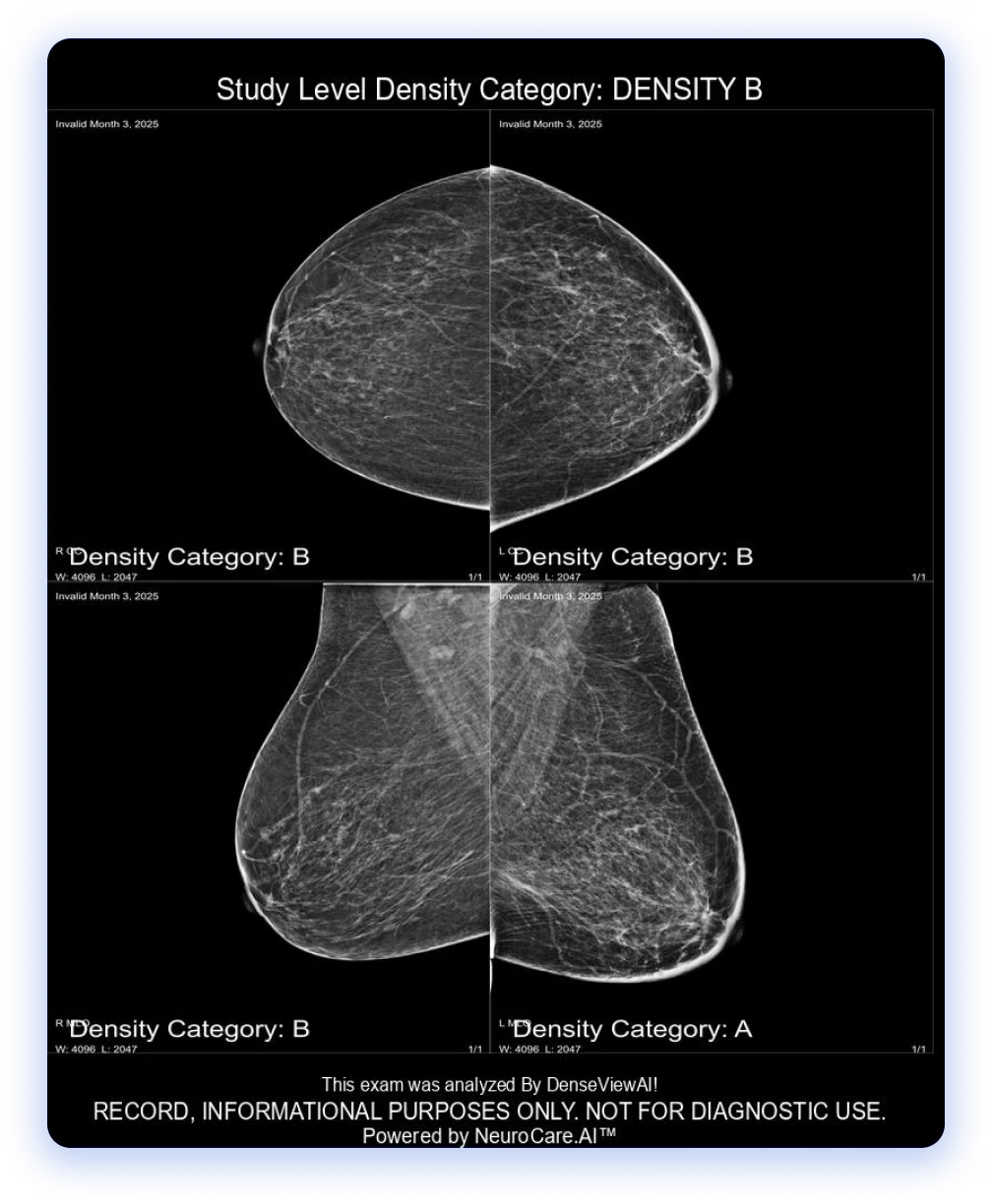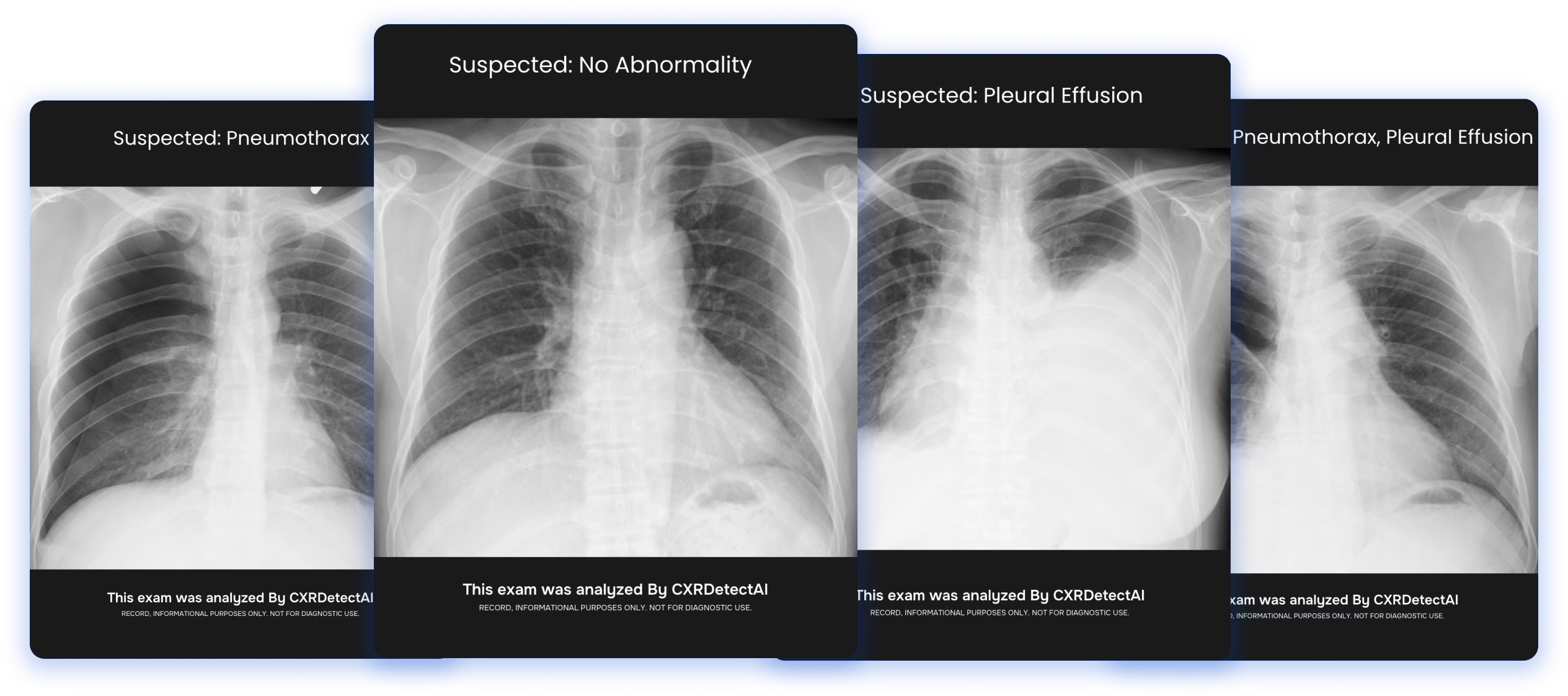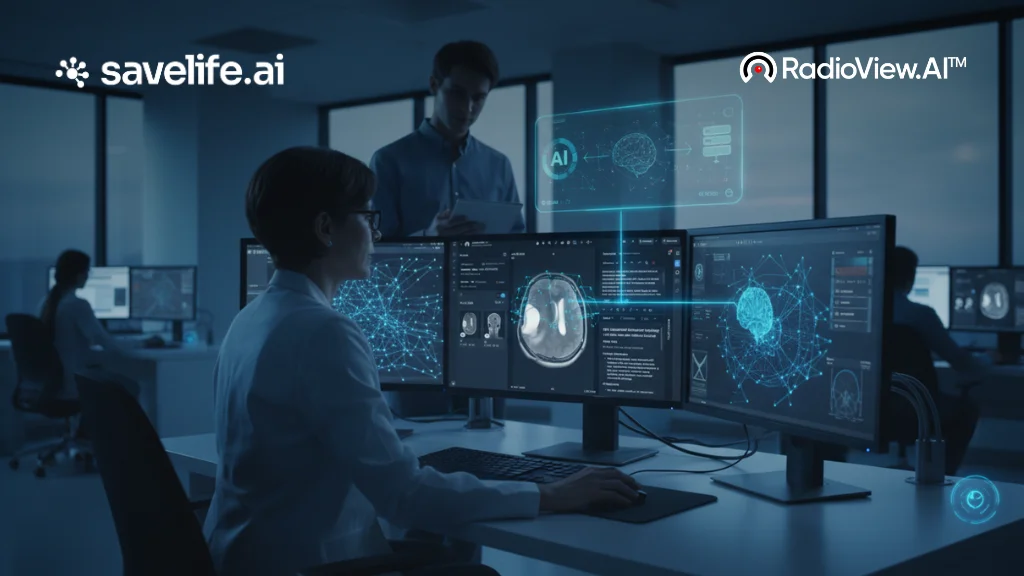
Radiology has no shortage of AI tools. Over 900 FDA-cleared algorithms now target everything from nodule detection to fracture classification to stroke triage. Yet a persistent problem undermines their clinical value: most AI tools operate in isolation, disconnected from the PACS, EHR, and reporting systems that define the radiologist’s actual workflow. The result is a fragmented environment where AI findings live in separate dashboards, measurements must be manually re-entered into reports, and critical patient data remains siloed across systems that do not communicate.
The consequences are measurable. Studies on healthcare data interoperability failures have linked siloed information and manual re-entry workflows to increased rates of patient-reported errors, documentation inconsistencies, and preventable delays in care. In radiology specifically, every disconnected system adds a context switch — and workflow research shows those switches cost clinicians both time and cognitive accuracy. The challenge in 2026 is no longer building better algorithms; it is integrating them end-to-end into the systems radiologists already use.
How AI Integrates with PACS: The Architecture That Matters
True AI-PACS integration requires more than a DICOM send/receive handshake. An AI-enabled PACS system must support bidirectional data flow: studies route automatically from PACS to AI engines for processing, and AI results — segmentation overlays, measurements, prioritization flags — return directly into the viewer and populate structured reports without manual intervention. This demands standards-based connectivity (DICOM, HL7 FHIR, DICOMweb) alongside flexible routing rules that accommodate multi-site, multi-vendor environments.
The practical workflow looks like this: a CT study arrives at PACS, is automatically routed to an AI segmentation engine, receives volumetric analysis, and the results appear as overlays within the radiologist’s viewer alongside the original images — all before the radiologist opens the case. Measurements auto-populate into the report template. Prior comparisons are surfaced automatically. The radiologist interprets, edits, and signs — never leaving the reading environment. When this loop is broken by standalone AI that requires separate logins, manual result retrieval, or copy-paste transcription, the efficiency gains of AI are largely negated.
Seamless Integration in Practice: RadioView.AI’s ConnectAI
RadioView.AI™ was architected to solve the integration problem at its root. Its ConnectAI module enables multi-site reading by allowing radiologists to switch seamlessly between any PACS or DICOM server from a single interface. Rather than maintaining separate logins and software instances for each facility, ConnectAI provides a unified reporting solution that integrates with multiple facilities through customizable settings — designed to work with the complete product suite without disrupting existing infrastructure.
The platform’s interoperability layer is its defining strength. RadioView.AI bridges EHRs, PACS, imaging systems, and AI tools into a single environment, eliminating data silos and working with all major healthcare platforms. Patient data, documentation status, and quality indicators are displayed in one place so clinicians can act quickly without manual data gathering — what the platform calls Smarter Decision Making. Users can modify predefined content and tailor it to specific clinical needs for subsequent notes, ensuring that AI-assisted workflows adapt to each practice rather than imposing rigid templates.
Quality, Compliance & Productivity — Built Into the Workflow
Integration is not only about speed — it is about safety and compliance. Disconnected systems create gaps: missing fields, unsigned notes, incomplete encounters, and coding errors that surface only at audit or, worse, after a patient event. RadioView.AI’s quality and compliance layer actively highlights these gaps — flagging incomplete documentation, coding issues, and unsigned reports — so teams identify and fix problems early, before they cascade into billing rejections or regulatory findings.
The platform also delivers productivity insights through its integrated dashboard, tracking time spent charting, after-hours work, and workflow bottlenecks. This gives practice leaders the data needed to redesign workflows based on evidence rather than intuition — identifying which steps consume disproportionate time, where after-hours burden concentrates, and which process changes yield the highest return.
The operational impact is quantified across multiple dimensions. Organizations leveraging integrated AI-PACS platforms report a 37% faster turnaround on radiology orders through streamlined end-to-end workflows. Centralized dashboard analytics enable 30% time savings in administrative decision-making by eliminating manual data gathering across disparate systems. Self-scheduling tools integrated into the patient access layer reduce missed appointments by 29%, directly improving scanner utilization and downstream reading volumes. And role-based access controls — a critical component of any multi-site, multi-user platform — have been associated with a 70% reduction in data breaches, protecting patient data while enabling the broad access that distributed radiology teams require.
Challenges Ahead — and Where PACS-AI Is Going
Significant challenges remain. Vendor lock-in continues to limit interoperability at many health systems, with proprietary PACS architectures resisting third-party AI integration. Regulatory frameworks for AI in diagnostic workflows are still evolving, creating uncertainty around liability and validation requirements. And change management — convincing radiologists and IT teams to trust a new integrated layer atop legacy infrastructure — remains a real-world barrier that no amount of technical capability can bypass alone.
The future of AI-enabled PACS, however, is clear in direction. The industry is moving toward vendor-agnostic platforms that sit above any PACS and orchestrate AI routing, result display, reporting, and collaboration from a single layer. RadioView.AI’s architecture — designed to integrate with existing infrastructure rather than replace it, connecting to any PACS or DICOM server while unifying AI tools, reporting, and team collaboration — represents this trajectory. As AI models grow more capable, the differentiator will not be the algorithm itself but the platform that delivers its output seamlessly into the hands of the clinician at the point of decision.
Conclusion
AI tools that operate in isolation create more friction than they resolve. The path forward for radiology teams is end-to-end integration: AI results flowing directly into the viewer and the report, multi-site access unified under a single platform, and quality, compliance, and productivity insights embedded into the daily workflow rather than extracted after the fact. RadioView.AI™, through ConnectAI and its interoperability-first architecture, demonstrates what this integration looks like in practice — bridging PACS, EHR, and AI systems into one environment where radiologists read, report, and collaborate without ever hitting a data silo or a manual re-entry step.
Disclosure: This article discusses commercially available products for informational purposes. Radiology teams should independently evaluate any platform against their clinical, technical, and regulatory requirements.
Learn more: radioview.ai